What Is PEMF Therapy?
A complete introduction to how it works, who uses it, and what to expect
There’s no shortage of wellness technologies making big promises right now. Some of them deserve more scepticism than they get. Some of them are genuinely interesting.
PEMF therapy sits in an unusual position — it has been studied in clinical settings for decades, used in everything from elite sports recovery to veterinary care, and yet most people have never heard of it until they stumble across it while looking for something else entirely.
If you’re here because someone mentioned it, or because you’ve been searching for a non-invasive approach to recovery or general wellbeing, this guide will give you an honest, grounded introduction. No exaggerated claims. No pressure. Just a clear explanation of what PEMF is, how it works, who uses it, and what you’d realistically expect.
Quick Overview
- What it is: A non-invasive wellness approach that uses low-frequency electromagnetic pulses to interact with the body’s natural cellular processes
- How it’s delivered: Through a mat, pad, or handheld device placed on or near the body
- Who uses it: A wide range of people — from athletes and biohackers to older adults, desk workers, and pet owners
- Sessions: Typically 10–30 minutes, at home or in a clinic
- Safety: Generally well-tolerated; important precautions apply for those with implanted electronic devices
- What to expect: Gradual, subtle changes with consistent use — not an overnight fix
What Does PEMF Stand For?
PEMF stands for Pulsed Electromagnetic Field therapy.
The name is accurate, if not especially poetic. A PEMF device generates electromagnetic pulses — gentle, rhythmic bursts of energy — that travel through body tissue. Unlike X-rays or certain medical imaging technologies, PEMF operates at very low frequencies and intensities, well within ranges considered safe for regular use.
The therapy has been around longer than most people realise. NASA researched it in the context of astronaut bone density loss. Orthopaedic surgeons have used specialised PEMF devices since the 1970s to support bone healing. Today, it’s moved from clinical settings into home use — and the devices available to consumers are more refined and accessible than they’ve ever been.
How Does PEMF Therapy Work?
Every cell in your body runs on electrical energy. Cells generate tiny electrical charges as they function — communicating, repairing, and maintaining themselves through constant electrical exchanges. When those processes are working well, the body tends to feel and function better. When they’re disrupted — through stress, age, injury, or poor recovery — things start to feel a bit off.
PEMF therapy is built around the idea that gentle electromagnetic pulses can support and encourage those natural cellular processes. The pulses pass through the body without you feeling much — maybe a mild warmth or light tingling at higher intensities, but often nothing at all.
In more specific terms, PEMF is thought to support:
- Cellular energy production — some research suggests an influence on ATP (the energy currency of every cell in your body)
- Circulation and nutrient exchange — supporting the movement of blood and oxygen to tissues
- The body’s natural recovery processes — helping tissue repair more efficiently after exertion or stress
- Nervous system regulation — lower frequencies in particular are associated with relaxation and sleep support
It’s worth being clear about what this means in practice: PEMF isn’t making your body do something it wouldn’t otherwise do. It’s more like creating better conditions for the body to do what it already knows how to do. That distinction matters when setting expectations.
What Are the Different Types of PEMF Devices?
PEMF devices vary considerably, and understanding the differences helps you make sense of what you’re looking at when you start researching.
Full-Body Mats
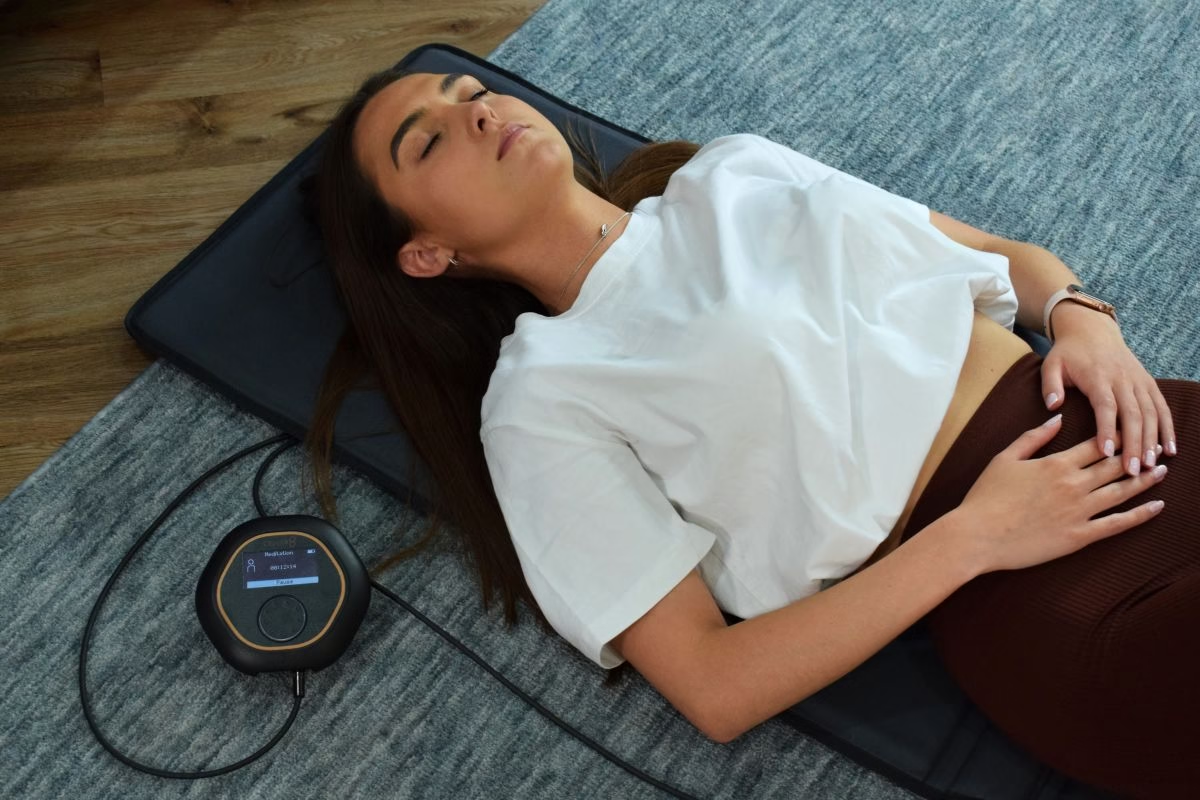
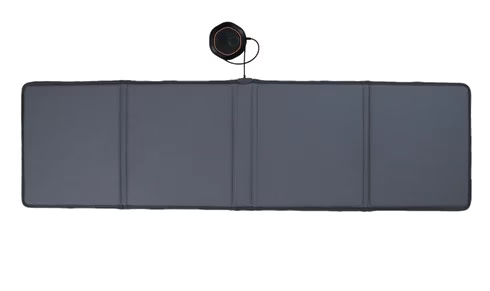
The most common home-use format. You lie on the mat — usually the size of a yoga mat or single bed — and the electromagnetic field covers your whole body during the session. These are the most practical option for daily use, since you can use one while reading or resting.
Targeted or Local Applicators
Smaller devices or attachments designed to focus on a specific area — a joint, the lower back, the neck. Often used alongside a mat, or as a standalone device for localised support.
Portable Controllers
Some systems — including CELLER8 — use a rechargeable cordless controller rather than a direct mains connection. This means the controller itself is portable and battery-powered, making it useful for targeted spot use on a specific joint or area without any cables at all. When connected to a full mat, a cable is used — but the absence of a fixed mains lead still makes the overall system considerably more flexible for travel or use in different rooms and locations.
Clinical and High-Intensity Devices
Professional clinic devices operate at much higher intensities than home-use equipment. They’re typically used under practitioner supervision, in shorter sessions, for more specific therapeutic goals. They are not designed for unsupervised daily home use.
Key Specs Worth Understanding
When you look at PEMF devices, you’ll encounter a few technical terms worth knowing:
- Gauss — the unit of magnetic field intensity. Most home-use wellness devices operate between 1 and 100 Gauss, which sits within the range most commonly referenced in research on daily wellness use. Higher-intensity clinical devices reach significantly higher levels.
- Frequency (Hz) — how many pulses per second the device delivers. Different frequency ranges are associated with different effects: higher frequencies (12–30 Hz) are linked to energy and alertness; lower frequencies (1–8 Hz) are associated with relaxation and sleep. Many devices let you choose or offer pre-set programmes.
- Waveform — the shape of the electromagnetic pulse. Square waveforms are common in consumer devices and are associated with consistent, balanced delivery.
Who Uses PEMF Therapy?
One of the more interesting things about PEMF is how broad its user base has become. It doesn’t belong to any single wellness demographic.


Athletes and active people have been early adopters — recovery after training, support for muscle repair, maintaining performance during heavy training blocks. Several professional sports teams have incorporated PEMF into their recovery protocols.
Biohackers and longevity enthusiasts tend to combine PEMF with other approaches — red light therapy, sleep optimisation, cold exposure — as part of a broader routine aimed at long-term health and performance.
Older adults often come to PEMF looking for support with mobility, everyday discomfort, or sleep quality. For this group, the non-invasive nature and ease of use at home are particularly appealing. Our dedicated guide to PEMF therapy for seniors goes into considerably more depth.
If you’re considering trying PEMF for the first time, CELLER8 currently have a sale on their Mini, Travel and Pet Mat ranges — a more affordable way to get started without committing to a full-size mat. View the CELLER8 sale →
Desk workers and people with sedentary lifestyles find it a useful complement to a largely sedentary day — supporting circulation and helping the body transition out of a prolonged sitting posture.
Wellness practitioners — from physiotherapists to massage therapists to holistic health coaches — incorporate PEMF devices into their client offerings.
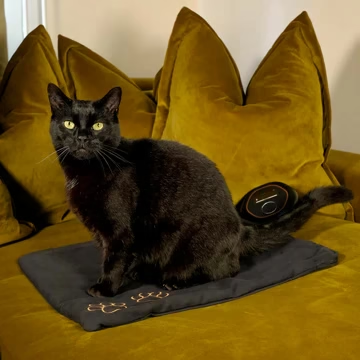
Pet owners are a growing segment, using purpose-designed pet mats for dogs and cats, particularly older animals dealing with stiffness or post-activity soreness. The same cellular principles apply; the devices are gentler and sized appropriately.
What Is PEMF Therapy Commonly Used For?
While individual responses vary and PEMF is a wellness tool rather than a medical treatment, common areas of exploration include:
Recovery after physical activity — muscle soreness, tissue repair, bouncing back after exertion. This is where PEMF has its longest history of use in performance settings.
Everyday discomfort and joint stiffness — particularly for those dealing with the kind of chronic, low-grade physical discomfort that comes with age, a demanding lifestyle, or old injuries. Our article on PEMF therapy for seniors explores this further.
Sleep support — lower-frequency PEMF programmes are often used in the evening, with some users reporting more settled and deeper sleep with consistent use.
Stress and nervous system regulation — the relaxation response that lower frequencies can support makes PEMF a useful tool for winding down, particularly for people who struggle to switch off at the end of the day.
Circulation support — improving the movement of blood and lymph through tissue, which underpins many of the other benefits people report.
Bone health — this is one of the more researched areas in PEMF science. Studies have explored its potential role in supporting bone density, which is particularly relevant for those concerned about long-term skeletal health.
It’s important to keep this in perspective. PEMF devices are wellness tools. They are not medical devices, they are not intended to diagnose or treat any condition, and they are not a replacement for medical care. Anyone managing a specific health condition should speak with their doctor before incorporating PEMF.
What Does a Typical PEMF Session Look Like?

In practice, a home PEMF session is fairly unremarkable — which is actually part of the appeal.
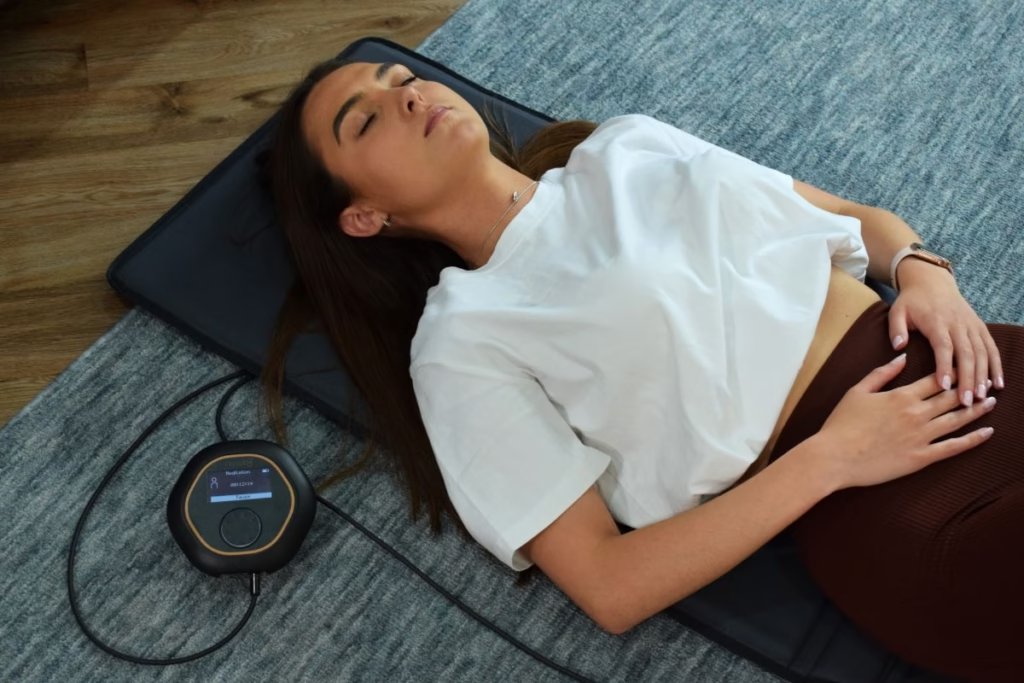
You set up the mat, choose a programme or frequency (most modern devices make this simple), and lie down. That’s essentially it.
Sessions typically run 10–30 minutes. Many people use the time to read, listen to something, or simply rest. The device runs quietly in the background. You don’t need to do anything specific.
Most people start with shorter sessions at lower intensities and build gradually. This isn’t because PEMF is particularly intense — it’s just sensible practice with any new wellness routine.
Frequency of use varies. Some people use PEMF daily; others use it several times a week. Consistency matters more than frequency — showing up regularly over weeks and months produces more noticeable results than occasional intense use.
Is PEMF Therapy Safe?

For most people, PEMF at home-use intensities is considered safe and well-tolerated. There are no known side effects from correct use within manufacturer guidelines.
However, there are important precautions. Speak to your doctor before using PEMF if you have:
- A pacemaker or implanted cardiac device
- Any other implanted electronic device
- Epilepsy or a history of seizures
- Active cancer (guidance varies — your medical team is the right person to advise)
- Pregnancy
If none of those apply, the sensible approach is to start gently — short sessions, low intensity — and pay attention to how your body responds. There is no benefit in rushing.
Home Devices vs Professional Treatments
Professional treatments are available at some physiotherapy clinics, wellness centres, and recovery spas. These use higher-intensity equipment under practitioner supervision, and sessions are typically part of a structured programme. They tend to be more appropriate for specific, acute situations.
Home devices are where most people end up — and for daily wellness use, they make the most practical sense. You can be consistent, which is the factor that matters most. You’re not limited by clinic hours or travel time. And you’re building a routine that becomes part of daily life rather than an occasional intervention.
The gap in intensity between home and clinical devices is real, but for ongoing wellness support rather than acute treatment, home devices in the research-aligned intensity range are generally considered appropriate.
What PEMF Is — and What It Isn’t
This is worth being clear about, because the wellness space has a tendency toward overstatement.
What PEMF is:
- A non-invasive wellness tool
- Something that supports the body’s natural processes over time
- An approach that rewards consistency more than intensity
- A complement to other healthy habits, not a replacement for them
What PEMF isn’t:
- A cure for any condition
- A replacement for medical treatment or professional advice
- Something that produces dramatic results quickly
- Guaranteed to work the same way for everyone
The people who tend to get the most from PEMF are those who approach it with realistic expectations, use it consistently over several weeks, and pay attention to small, gradual changes rather than looking for dramatic shifts.
Frequently Asked Questions About PEMF Therapy
What does PEMF stand for?
PEMF stands for Pulsed Electromagnetic Field. The therapy uses rhythmic electromagnetic pulses to interact with the body’s natural cellular processes.
Is PEMF therapy the same as an MRI?
No. MRI machines use extremely powerful magnetic fields for medical imaging. PEMF therapy operates at a fraction of that intensity and is used as a wellness tool, not a diagnostic one.
How is PEMF different from a TENS machine?
TENS (Transcutaneous Electrical Nerve Stimulation) delivers electrical current directly to nerves through skin-contact electrodes, primarily for localised discomfort relief. PEMF uses electromagnetic fields that pass through tissue without direct electrical contact, and is used more broadly for cellular and circulatory support.
Can PEMF therapy be used every day?
Yes. Many people use PEMF daily as part of their routine. Starting with shorter sessions and building gradually is the usual recommendation.
How long before you notice results from PEMF?
Most people who notice a difference do so after several weeks of consistent use. Initial changes are often subtle — better sleep, feeling less stiff in the morning — before more noticeable differences emerge.
Can children use PEMF?
Most device manufacturers recommend consulting a doctor before using PEMF with children. Home-use PEMF is generally designed with adults in mind.
Can PEMF be used on pets?
Yes — purpose-designed pet PEMF mats are available and increasingly popular, particularly for older dogs dealing with stiffness. Learn more about PEMF for pets →
Is PEMF therapy covered by health insurance?
Generally not for home-use wellness devices. Some clinical PEMF treatments may be covered in specific circumstances — check with your insurer.
What’s the difference between low and high-intensity PEMF?
Low-intensity devices (typically 1–100 Gauss) are used for daily wellness support and general home use. High-intensity devices (reaching thousands of Gauss) are used in clinical settings for more specific therapeutic purposes and are not designed for unsupervised daily use.
Does PEMF therapy have any side effects?
For most people, none. Some people report mild fatigue or light-headedness after initial sessions, which tends to settle as the body adjusts. Starting gently and at a low intensity resolves this in most cases.
PEMF Wellness Guide is an independent resource for people exploring PEMF therapy and complementary wellness approaches. Nothing in this article constitutes medical advice. Always consult a qualified healthcare professional before beginning any new wellness practice, particularly if you have an existing medical condition. PEMF devices discussed on this site are wellness tools, not medical devices.